



-
اندازه متن
+
XPS Foam: The Superior Thermal Insulation Choice – A Comprehensive Comparison with EPS Foam
In the realm of thermal and acoustic insulation, selecting the right material is crucial for ensuring energy efficiency, durability, and cost-effectiveness in construction projects. This article delves into the characteristics, manufacturing processes, applications, and technical comparisons between Extruded Polystyrene (XPS) and Expanded Polystyrene (EPS) foams, aiding professionals in making informed decisions for their projects.Manufacturing Process of XPS Foam
XPS foam is produced through an extrusion process where polystyrene granules are melted and mixed with blowing agents and additives. This mixture is then forced through a mold to form a continuous sheet of foam with a closed-cell structure. The resulting product exhibits uniform density and enhanced mechanical and thermal properties.Advantages of XPS Foam
- High Thermal Insulation: XPS foam offers a low thermal conductivity, ensuring superior insulation performance over time.
- High Compressive Strength: Suitable for applications subjected to heavy loads, such as flooring systems and parking structures.
- Minimal Water Absorption: Its closed-cell structure provides excellent resistance to moisture, making it ideal for damp environments.
- Long-Term Durability: XPS maintains its structural integrity and insulation properties over extended periods.
- Resistance to Biological and Chemical Degradation: The material is resistant to mold growth and chemical corrosion.
Applications of XPS Foam
Due to its combination of strength, thermal insulation, and moisture resistance, XPS foam is widely used in various construction applications, including:- External wall insulation systems
- Flooring applications in buildings and warehouses
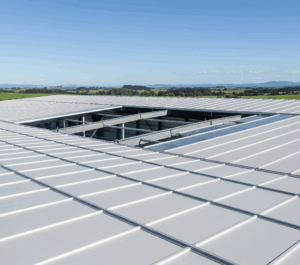
- Roofing systems, including green roofs
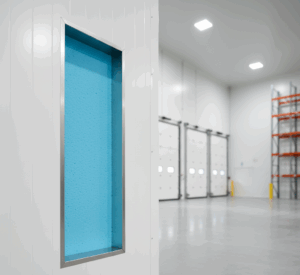
- Cold storage facilities and infrastructure tunnels
- Underground parking areas and foundation slabs
Technical Comparison: XPS vs. EPS
| Feature | XPS Foam | EPS Foam |
|---|---|---|
| Manufacturing Process | Extrusion – Continuous sheet with closed-cell structure | Expansion – Beads fused together, open-cell structure |
| Thermal Insulation | High and stable thermal resistance | Moderate thermal resistance, sensitive to moisture |
| Compressive Strength | High – Suitable for heavy load applications | Lower – Suitable for light load applications |
| Water Absorption | Minimal – Excellent moisture resistance | Higher – Performance decreases with moisture |
| Durability | Long-term stability and performance | Shorter lifespan – Performance degrades over time |
| Cost | Higher initial cost but cost-effective in the long term | Lower initial cost |






What is your opinion about this article?