



Comprehensive technical guide and specification for using XPS (extruded polystyrene) foam in livestock and poultry environments.
XPS Foam in Livestock & Poultry Farms — Technical Guide & Applications
Introduction: Why Insulation Matters on Modern Farms
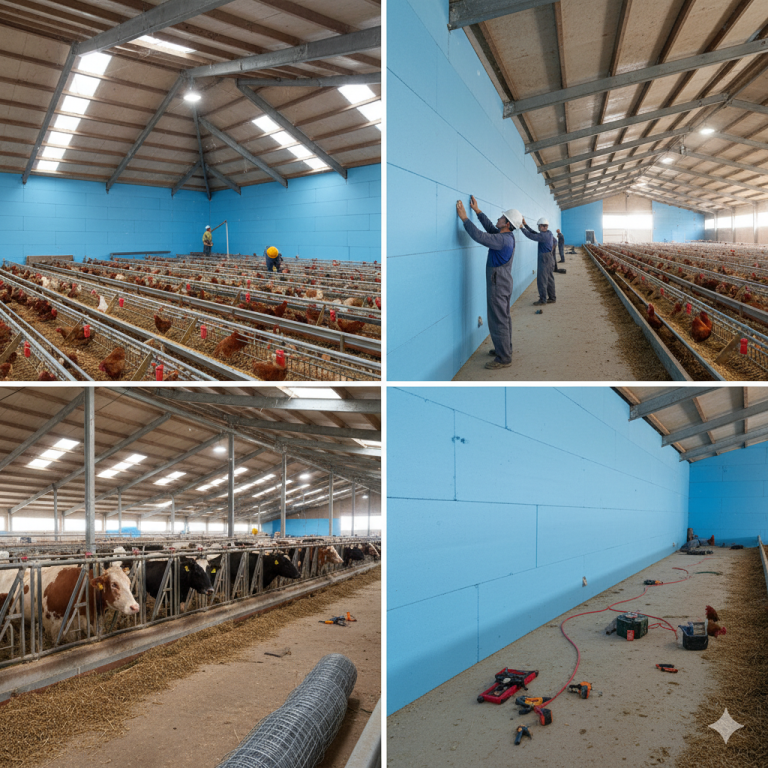
Efficient thermal control reduces energy costs, improves animal welfare and protects feed quality. XPS foam’s closed‑cell structure, low moisture permeability and robust mechanical properties make it an excellent candidate for farm insulation applications.
Technical Specifications
- Material: Extruded polystyrene (XPS)
- Thermal conductivity (λ): ~0.027–0.035 W/m·K
- Recommended density: 35–40 kg/m³ for heavy‑duty use
- Compressive strength: High — suitable for floors under pallet and equipment loads
- Service life: >20–30 years under proper installation
Primary Applications on Farms
Floor Insulation
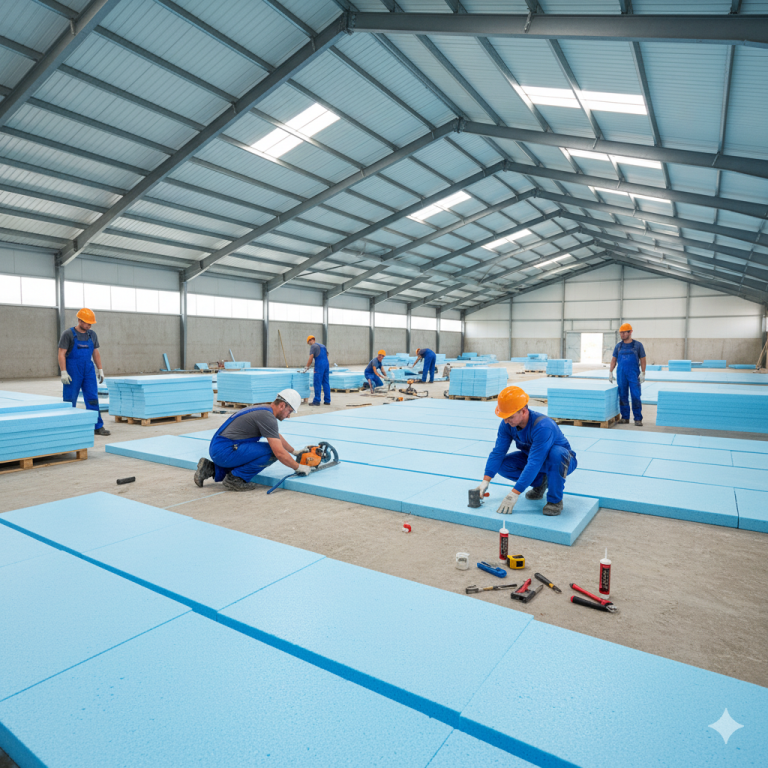
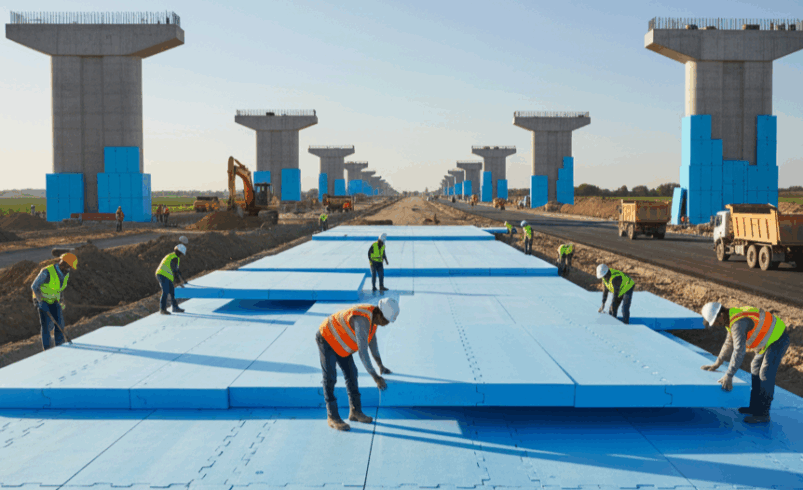
Place XPS below concrete slabs or within floor build‑ups to stabilise substrate temperature, insulate against ground freezing and block moisture migration. Typical thickness for farm floors ranges from 50 to 100 mm based on load and climate.
Wall & Roof Insulation
XPS panels on walls and roofs help maintain consistent ambient temperatures and reduce thermal swings — critical in poultry houses where temperature stability affects growth rates and feed conversion.
Feed Storage & Cold Rooms
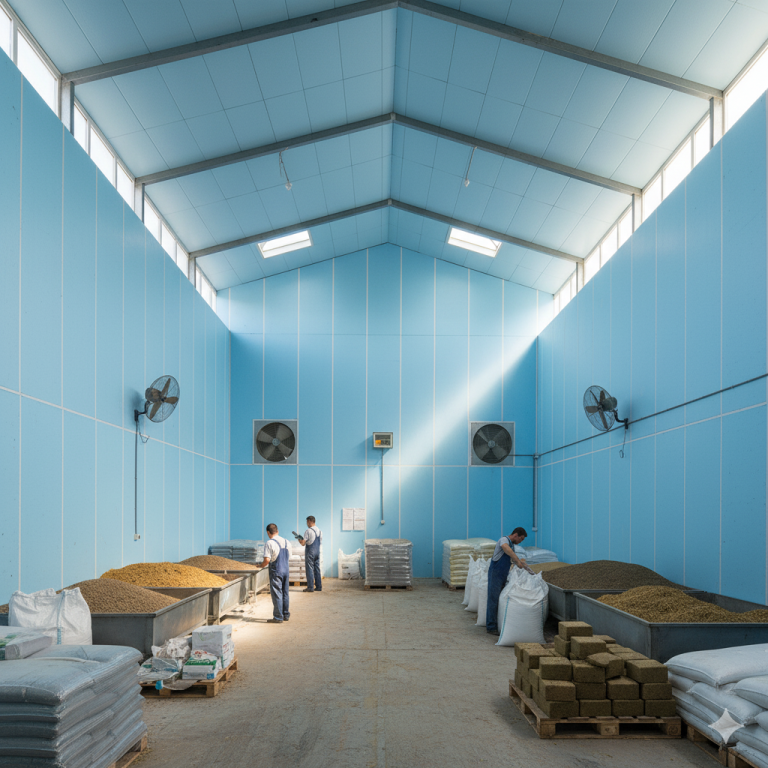
Use XPS in feed silos, storage rooms and cold chambers to prevent condensation, mould formation and spoilage. Proper detailing at joints prevents ingress of humid air.
Ventilation & Ductwork
Insulate ducts and ancillary structures with XPS to reduce condensation and protect against humid and chemically aggressive cleaning environments.
Installation Recommendations
- Use tongue‑and‑groove panel edges or tight mechanical joints to minimise air infiltration.
- Apply compatible adhesives and sealants at connections with concrete and masonry.
- Consider protective coatings in high‑humidity or chemical exposure areas.
- Verify compressive grade for floors to match expected loads (forklifts, pallets).
Comparison with Alternative Insulation
Compared with rock wool and EPS, XPS typically provides superior moisture resistance and higher compressive strength, making it preferable for farm floors and areas exposed to damp conditions.
Economic & Operational Benefits
Well‑specified XPS installations can reduce energy consumption by approximately 30–40%, improve animal performance in controlled‑environment houses and lower long‑term maintenance costs.
Environmental Considerations
XPS is recyclable via authorised waste streams. Energy savings achieved during operation also reduce the facility’s carbon footprint.
Purchasing & Supplier Advice
Buy direct from a reputable manufacturer (e.g. Elixir Pishbord) and request test certificates for thermal conductivity, density and compressive strength. Start with a pilot installation before committing to large‑scale rollout.
Frequently Asked Questions
Q: Is XPS suitable for humid farm environments?
A: Yes — XPS’s closed‑cell structure delivers excellent resistance to moisture and vapour when properly detailed.
Q: What panel thicknesses are recommended?
A: Floors: 50–100 mm (project dependent). Walls/Roofs: 30–80 mm depending on R‑value targets and climatic conditions.




What is your opinion about this article?